Choosing the right outdoor storage can transform a cluttered patio into a serene sanctuary. A deck box, often underestimated, plays a pivotal role in maintaining an organized and visually appealing outdoor living space, safeguarding everything from cushions to gardening tools. But when it comes to combining robust functionality with timeless aesthetics, the Pottery Barn Chatham Wood Deck Box often catches the eye. This comprehensive review delves deep into its construction, performance, and long-term value, helping you decide if this elegant piece is the perfect companion for your outdoor haven.
Understanding the Essence of a Deck Box
A deck box is essentially an outdoor storage unit designed to protect your patio essentials from the elements. More than just a container, it serves multiple functions, from storing seasonal cushions and pool accessories to garden tools and even doubling as extra seating or a side table. Their importance lies in their ability to declutter outdoor areas, extend the life of stored items by shielding them from sun, rain, and dirt, and contribute to the overall aesthetic of your space.
The evolution of deck boxes has seen a shift from basic, often unsightly plastic bins to sophisticated pieces of outdoor furniture crafted from a variety of durable materials. Early versions focused purely on utility, but modern designs prioritize both form and function, integrating seamlessly with existing patio décor. Today’s market offers a diverse range, including lightweight plastic resin, sturdy metal, elegant wicker, and classic wooden designs, each with unique characteristics and benefits tailored to different needs and environments.
Essential Criteria for Selecting a Deck Box
When investing in a deck box, especially one designed to be a prominent feature of your outdoor space, several key factors warrant careful consideration. These criteria ensure you select a product that not only meets your storage needs but also stands the test of time and weather.
Material
The material of a deck box is paramount to its durability, appearance, and longevity. Common options include plastic, metal, wicker, and various types of wood. Plastic resin deck boxes are known for being lightweight, budget-friendly, and highly weather-resistant, though they may lack the sophisticated look of natural materials. Metal options, typically aluminum or steel, offer strength and a modern aesthetic but can be prone to rust if not properly coated. Wicker, often synthetic, provides a classic look with good weather resistance over a lightweight frame.
Wood deck boxes, like the Pottery Barn Chatham, bring a natural warmth and elegance to any setting. They are prized for their robust construction and ability to blend harmoniously with garden landscapes. However, wood requires more maintenance than synthetic materials to preserve its beauty and structural integrity. The type of wood also matters significantly; hardwoods like mahogany and eucalyptus, known for their density and natural oils, offer superior moisture resistance compared to softer woods. The durability and protective qualities directly correlate with the material choice, influencing both the initial price and long-term value.
Size and Capacity
|
Our Picks for the Best Deck Box in 2026
As an Amazon Associate I earn from qualifying purchases.
|
||
| Num | Product | Action |
|---|---|---|
| 1 | VEVOR Outdoor Storage Box, 150 Gallon Waterproof PE Tarpaulin Deck Box w/Galvanized Frame, All-Weather Protection & Portable, for Camping, Garden, Poolside, and Yard, Black & Green |

|
| 2 | Outdoor Storage Box, 30 Gallon Resin Waterproof Deck Box, Lockable, Built-in Handle, Outside Storage Container for Patio, Garden and Garage |
|
| 3 | Suncast Outdoor Deck Box - 22 Gallon Java Resin Outdoor Storage Box, Weatherproof Patio Storage Bin Container for Seating & Organizing Cushions, Tools & Towels for Pool, Yard, & Garden |
|
| 4 | YITAHOME Outdoor Storage Box, 45 Gallon Waterproof Resin Deck Box, Lockable Organizer for Patio, Poolside, Deck, Cushions, Throw Pillows, Garden Tools, Brown |
|
| 5 | Keter Kentwood 50 Gallon Resin Deck Box for Outdoor Storage – Weather‑Resistant Balcony & Patio Box for Cushions, Throw Pillows & Garden Tools, Dark Grey |
|
| 6 | Keter Signature Everwood 50 Gallon Resin Deck Box for Outdoor Storage – Weather‑Resistant Balcony & Patio Box for Cushions, Throw Pillows & Garden Tools, Walnut |
|
| 7 | Keter XXL 230 Gallon Deck Storage Box Outdoor Patio Container ~ White |
|
| 8 | EAST OAK Outdoor Storage Box, 31 Gallon Deck Box Indoor and Outdoor Use, Waterproof Resin Storage Bin for Package Delivery, Patio Cushions, Gardening Tools, Lockable, UV Resistant, Grey |
|
| 9 | Keter City 30 Gallon Resin Outdoor Storage Box and Patio Furniture Side Table for Pool and Garden Accessories, Brown |
|
| 10 | Keter City Outdoor Plastic Storage Box Garden Furniture 57.8 x 44 x 54.8 cm - Brown |
|
Deck boxes come in a wide range of sizes, from compact units perfect for small balconies to oversized chests capable of holding an entire patio furniture cushion set. Choosing the appropriate dimensions and internal volume (often measured in gallons or liters) is critical. Consider what you intend to store: smaller items like gardening gloves and hand tools might only need a 30-gallon box, while bulky chaise lounge cushions could demand upwards of 150 gallons.
The physical footprint of the deck box must also fit comfortably within your available space without obstructing pathways or views. For instance, a small patio might benefit from a multi-functional box that doubles as a bench or side table, maximizing utility. Larger decks can accommodate more substantial storage solutions that can become a focal point or blend into a larger outdoor furniture arrangement. Portability, though not always a primary concern for larger units, can be a bonus for smaller boxes, allowing flexibility in rearranging your outdoor layout.
Design and Features
Beyond basic storage, modern deck boxes offer a variety of design elements and functional features that enhance their utility and aesthetic appeal. Designs range from rustic and traditional to sleek and contemporary, often available in various colors and finishes to match existing outdoor décor.
Crucial features include weatherproofing—many quality deck boxes incorporate internal liners or tightly fitting lids to prevent water and dust intrusion. Hydraulic hinges are a desirable addition, allowing for smooth, soft-closing lids that prevent slamming and accidental finger pinches. Additional features like locks for security, internal dividers for organization, or built-in wheels for easy relocation add to the convenience and practicality of the unit. The overall construction, including joinery methods and hardware finish, also speaks to the quality and expected lifespan of the deck box.
A Closer Look at the Pottery Barn Chatham Wood Deck Box
The Pottery Barn Chatham collection is renowned for its classic design and quality craftsmanship, and its wood deck box is no exception. It is crafted from a combination of FSC-certified mahogany and eucalyptus, both dense hardwoods selected for their inherent moisture-resistant properties. This commitment to sustainably harvested, plantation-grown wood underscores an emphasis on responsible sourcing. The wood is kiln-dried, a process that removes moisture to enhance stability and prevent warping, and features traditional mortise-and-tenon joinery for superb strength and durability.
The Chatham Wood Deck Box typically showcases an elegant, weathered gray finish, although the specific appearance can vary across the collection. Exposed hardware, often with an antique brass finish, adds a touch of classic sophistication. Beyond its primary function as storage, its sturdy construction and flat top allow it to double effectively as a versatile bench or a convenient outdoor coffee table, maximizing its utility in any outdoor setting.
Detailed Quality Test and Comparison
Upon closer inspection and considering user experiences, the Pottery Barn Chatham Wood Deck Box reveals a balance of premium materials and real-world performance. The use of FSC-certified mahogany and eucalyptus, combined with kiln-dried processing and mortise-and-tenon joinery, establishes a strong foundation for durability. These dense hardwoods are naturally rich in oils that offer inherent moisture resistance, a significant advantage for outdoor furniture.
However, it is important to set realistic expectations regarding wood products exposed to the elements. Pottery Barn itself notes that, as is typical for outdoor wood, the Chatham’s stained finish will weather over time to a silver-gray. Hairline cracking and peeling are also explicitly mentioned as inherent to stained outdoor woods and are not considered defects. While this is a natural process for wood, some users have expressed frustration with the aesthetic changes, reporting peeling and cracking within a couple of years, even with diligent covering. This suggests that while the underlying wood is robust, the topcoat’s longevity against harsh weather may require consistent maintenance or embrace of its natural weathering.
Compared to synthetic alternatives, the Chatham offers unmatched aesthetic appeal, integrating seamlessly with high-end outdoor decor. Its hydraulic hinges, a feature common in quality deck boxes, ensure a smooth and safe operation of the lid. Adjustable levelers are a practical addition, providing stability on uneven patio surfaces. While the initial investment for the Chatham is higher than many plastic or resin deck boxes, it aims to deliver a superior, more furniture-like quality. Its performance can be sustained with proper care, including regular covering and seasonal re-staining or oiling to mitigate the effects of weathering.
“The true test of a premium wood deck box isn’t just its initial beauty, but how gracefully it ages. Understanding that wood will naturally evolve with the elements is key to appreciating its long-term value.” – Elara Vance, Outdoor Furniture Specialist
| Feature | Pottery Barn Chatham Wood Deck Box | Typical Premium Wood Deck Box |
|---|---|---|
| Material | FSC-certified Mahogany and Eucalyptus (kiln-dried) | Teak, Shorea, or other dense, weather-resistant hardwoods (often kiln-dried) |
| Construction | Mortise-and-tenon joinery | Dovetail or mortise-and-tenon joinery |
| Weathering | Stained finish weathers to silver-gray; hairline cracking/peeling inherent. Requires covering/re-staining for pristine look. | Natural weathering to silver-gray; may require oiling/sealing to maintain original color and protect wood. |
| Hardware | Exposed antique brass finish (for Chatham sectional components, likely consistent for deck box) | Stainless steel or marine-grade hardware for corrosion resistance |
| Additional Features | Sturdy lid with hydraulic hinges, adjustable levelers, doubles as seating/table. | Hydraulic lid supports, internal liner (sometimes), secure latching, ventilation. |
| Aesthetic | Classic, elegant, weathered gray appearance. | Varies by wood type and finish; generally natural, sophisticated. |
| Maintenance Needs | High: Seasonal covering, cleaning, potential sanding and re-staining to restore finish, indoors storage during off-season recommended. | Moderate to High: Regular cleaning, oiling/sealing annually to preserve look and protect wood. |
| Price Point | High-end | High-end |
 Pottery Barn Chatham Wood Deck Box on a patio with cushions stored inside
Comprehensive Buying Guide for Premium Wood Deck Boxes
Purchasing a premium wood deck box like the Pottery Barn Chatham is a significant investment that requires careful consideration. Follow these steps to ensure you make an informed decision that perfectly suits your outdoor lifestyle and aesthetic.
Before you begin, clearly define your needs. What specific items will you be storing? Consider their dimensions and total volume. This will help determine the necessary size and capacity. Assess your outdoor space to identify the ideal location for the deck box, taking into account sun exposure, rainfall, and overall traffic flow. Your budget is also a crucial factor, as premium wood deck boxes are generally a higher-end purchase.
When making your selection, prioritize the type of wood and its construction. Look for dense hardwoods like teak, mahogany, or eucalyptus, which offer natural resistance to moisture and pests. Verify that the wood is kiln-dried, a process that enhances stability and durability. Examine the joinery; mortise-and-tenon is a hallmark of quality craftsmanship, ensuring a robust structure. Pay attention to hardware, preferring stainless steel or antique brass for exposed components to resist rust and corrosion. Essential features such as hydraulic lid supports for safe operation and a weather-resistant liner to protect contents from moisture are also key indicators of quality.
For purchasing, consider reputable retailers known for quality outdoor furniture. High-end department stores, specialty outdoor living stores, and direct brand websites (like Pottery Barn’s) are reliable sources. While browsing online offers convenience and a broader selection, visiting a showroom allows you to physically inspect the craftsmanship, feel the materials, and assess the size in person. Always review the product warranty and return policy, as these provide crucial protection for your investment.
Expert Tips for Using and Maintaining Your Wood Deck Box
Proper use and diligent maintenance are crucial for extending the lifespan and preserving the beauty of your Pottery Barn Chatham Wood Deck Box. Following these expert tips will help ensure your investment remains a valuable and attractive part of your outdoor space for years to come.
To maximize the longevity of your deck box, always ensure that items stored inside are dry to prevent mold and mildew growth. While the Chatham is designed for outdoor use, its finish will weather naturally. To slow this process and maintain its original appearance, consider using an outdoor furniture cover during inclement weather or when the box is not in use for extended periods. It is also recommended to store wood furniture indoors or in a sheltered area during the off-season, especially in climates with harsh winters or extreme humidity. Always use the hydraulic hinges gently, allowing the lid to close smoothly without forcing it.
For cleaning, wipe spills promptly with a clean, dry cloth. Avoid abrasive cleaners or harsh chemicals, which can strip the wood’s protective finish. For general cleaning, a mild soap solution and a soft brush can be used, scrubbing gently along the wood grain. Rinse thoroughly with a garden hose, ensuring no soapy residue remains, and allow the box to air dry completely. Regularly check all fasteners and hardware, tightening any loose screws to maintain structural integrity.
Common issues with wood deck boxes include the natural graying of the wood, hairline cracks, and peeling of the finish, all of which Pottery Barn notes as inherent to their stained outdoor woods. If you prefer to restore the original look, sand the weathered areas and apply a suitable outdoor deck stain, following the manufacturer’s instructions for preparation and application. This process not only revives the aesthetic but also adds another layer of protection to the wood. By adhering to these simple care practices, your Chatham Wood Deck Box will continue to be a functional and elegant addition to your outdoor living area.
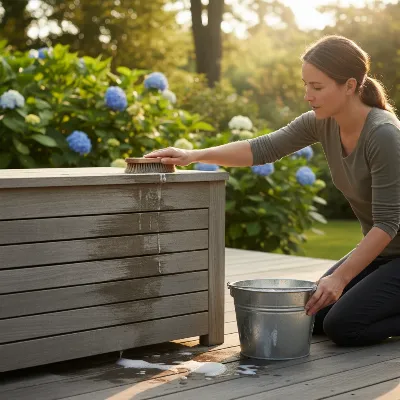 Man cleaning a weathered wood deck box with a soft brush and mild soap
Conclusion
The Pottery Barn Chatham Wood Deck Box represents a premium choice for outdoor storage, blending functional design with the timeless elegance of natural wood. Crafted from FSC-certified mahogany and eucalyptus, and featuring robust construction, it offers a sophisticated solution for decluttering your patio while also serving as versatile extra seating or a surface. While its wooden composition inherently requires diligent care to maintain its pristine appearance against the elements, the Chatham’s quality materials and thoughtful design speak to its long-term value.
Understanding its natural weathering process and committing to recommended maintenance, such as covering it during harsh weather and occasional re-staining, will ensure this investment continues to enhance your outdoor living space for years. The Chatham Wood Deck Box is more than just storage; it’s a statement piece designed to enrich your outdoor experience. Are you ready to improve your outdoor organization with a touch of enduring craftsmanship?
Frequently Asked Questions
How do I protect my wooden deck box from extreme weather?
To protect your wooden deck box, store it indoors during the off-season or cover it with a high-quality, waterproof outdoor furniture cover when not in use or during severe weather. Elevating it slightly off the ground can also prevent water pooling around the base, and ensuring all contents are dry before storage helps prevent mold.
Is the natural weathering of wood deck boxes a sign of poor quality?
No, the natural weathering of wood, including graying and minor hairline cracks, is an inherent characteristic of outdoor wood products exposed to the elements. For products like the Pottery Barn Chatham, this is an expected part of its aging process, not a defect, though proper maintenance can slow down these changes.
How often should I re-stain or seal my wooden deck box?
The frequency of re-staining or sealing depends on your climate, sun exposure, and desired aesthetic. Generally, a wooden deck box should be cleaned and re-stained or sealed annually or biannually to maintain its color, protect the wood from UV damage and moisture, and extend its overall lifespan.
Can a wood deck box withstand all climates?
While dense hardwoods like mahogany and eucalyptus offer good weather resistance, consistent exposure to extreme heat, cold, humidity, or heavy rainfall will accelerate wear. Wood deck boxes perform best in moderate climates with diligent covering, or when stored indoors during particularly harsh seasons, to ensure maximum longevity.
What’s the best way to clean a wooden deck box?
Clean a wooden deck box with a mild soap solution and a soft-bristle brush, scrubbing gently along the wood grain. Rinse thoroughly with a garden hose to remove all soap residue, and allow the box to air dry completely. Avoid using harsh chemicals or pressure washers, as these can damage the wood finish.
Get our weekly buyer guide
Practical specs, not advice. Unsubscribe anytime.
