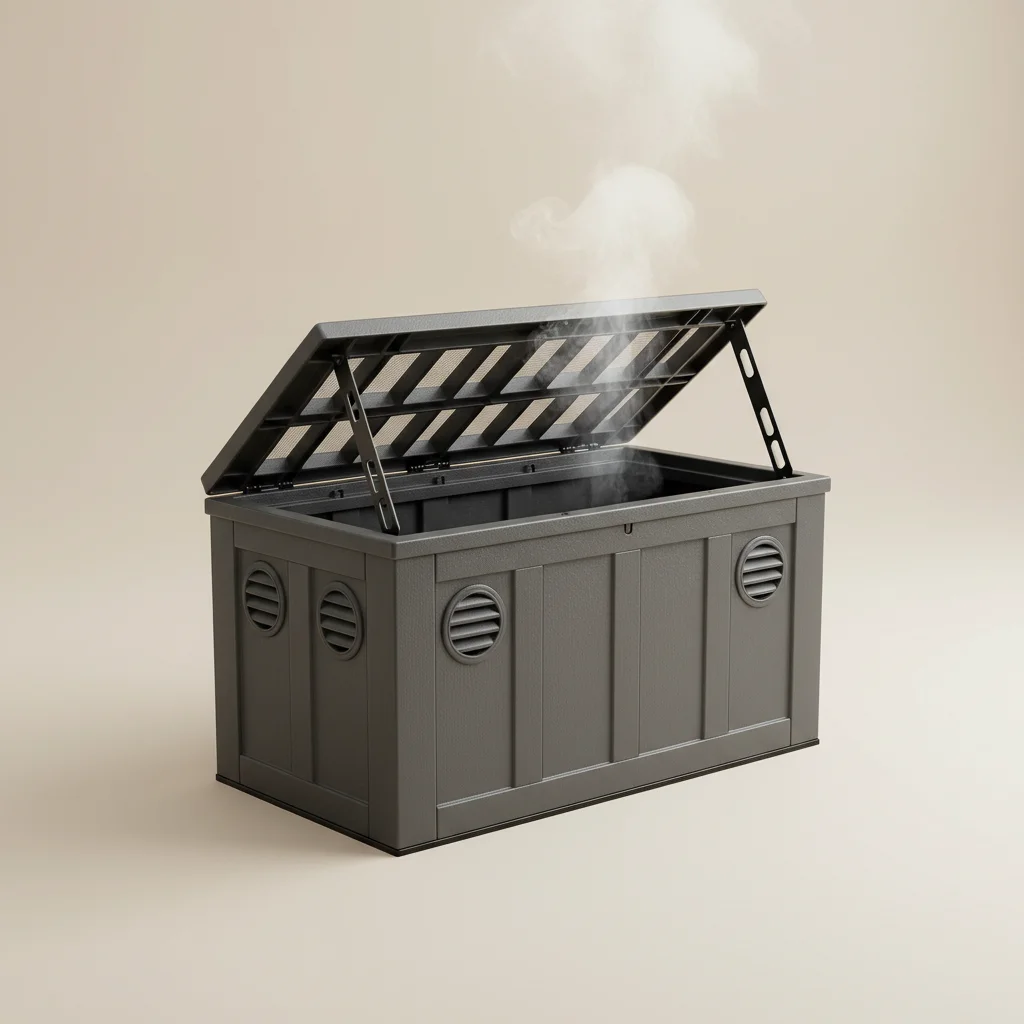
Proper deck box ventilation is crucial for preventing mold, mildew, and unpleasant odors, especially in humid climates. The most effective way to ensure adequate airflow is by incorporating at least two strategically placed vents, ideally near the top and bottom of the unit, to facilitate a natural convection current. This allows moist air to escape and fresh air to enter, keeping the contents dry and protected.
Why Ventilation Matters for Your Deck Box
Without proper ventilation, a deck box can become a breeding ground for mold and mildew. Trapped moisture, especially from damp cushions, pool toys, or even just high humidity, creates an ideal environment for these fungi to thrive. This not only damages your stored items but can also lead to persistent musty smells that are difficult to eliminate. Good airflow helps to equalize the temperature and humidity inside the box with the outside environment, significantly reducing the risk of moisture buildup.
Understanding Airflow Principles in Storage
Effective ventilation relies on basic principles of air movement. Warm, moist air tends to rise, while cooler, drier air sinks. By placing vents at different heights, you create a passive ventilation system. Air enters through lower vents, circulates, picks up moisture, and then exits through higher vents. This continuous exchange is far more effective than a single vent, which can lead to stagnant air pockets. Consider the prevailing wind direction in your yard when positioning your deck box, as this can also aid in natural air circulation around the unit.
DIY Ventilation Solutions for Existing Deck Boxes
If your current deck box lacks sufficient ventilation, there are several DIY solutions you can implement. The simplest involves drilling small, evenly spaced holes (e.g., 1/4 inch to 1/2 inch diameter) along the upper and lower edges of the box. For a more refined look and better protection against pests, you can install small louvered vents or mesh-covered openings. Ensure any modifications do not compromise the structural integrity or water resistance of the box. Always use a drill bit appropriate for the material of your deck box to prevent cracking or splintering.
- Drill small, evenly spaced holes (1/4″-1/2″) near the top and bottom edges.
- Install louvered vents for a cleaner look and pest deterrence.
- Add mesh screens behind drilled holes to keep insects out.
- Ensure new openings do not compromise the box’s waterproof seal.
- Consider adding a small, battery-operated fan for active air circulation in very damp conditions.
Choosing Deck Boxes with Built-In Ventilation
When purchasing a new deck box, prioritize models that explicitly mention built-in ventilation features. Many manufacturers now integrate discreet vents into the design, often along the underside of the lid or in the side panels, specifically to combat moisture issues. These designs are typically engineered to maintain water resistance while promoting airflow. Look for descriptions that highlight
Get our weekly buyer guide
Practical specs, not advice. Unsubscribe anytime.

The advice on preventing mold and mildew is spot on. I had a cheaper deck box that didn’t have any vents, and sure enough, my gardening gloves got moldy. My only complaint is that adding vents to an older plastic box can be a bit tricky if you’re not handy. Wish I’d known this before buying my first one.
I appreciate the tip about natural convection currents. I always just thought ‘a vent is a vent,’ but understanding how air needs to flow from bottom to top really helped. My new deck box came with some small vents, but I might add a couple more near the bottom just to be safe, especially for my pool toys that sometimes go in a little damp.
I live in Florida, so humidity is a constant battle. I used to have issues with my patio cushions getting that musty smell, even when stored. After reading about the importance of two strategically placed vents, I added some to my existing deck box, one high and one low. It’s made a huge difference; everything stays fresh now!
This was so helpful! I was about to buy a new deck box and wasn’t even thinking about ventilation beyond just keeping rain out. The point about trapped moisture creating a breeding ground for fungi really stuck with me. I’m definitely going to prioritize a model with good built-in airflow now to protect my outdoor blankets.