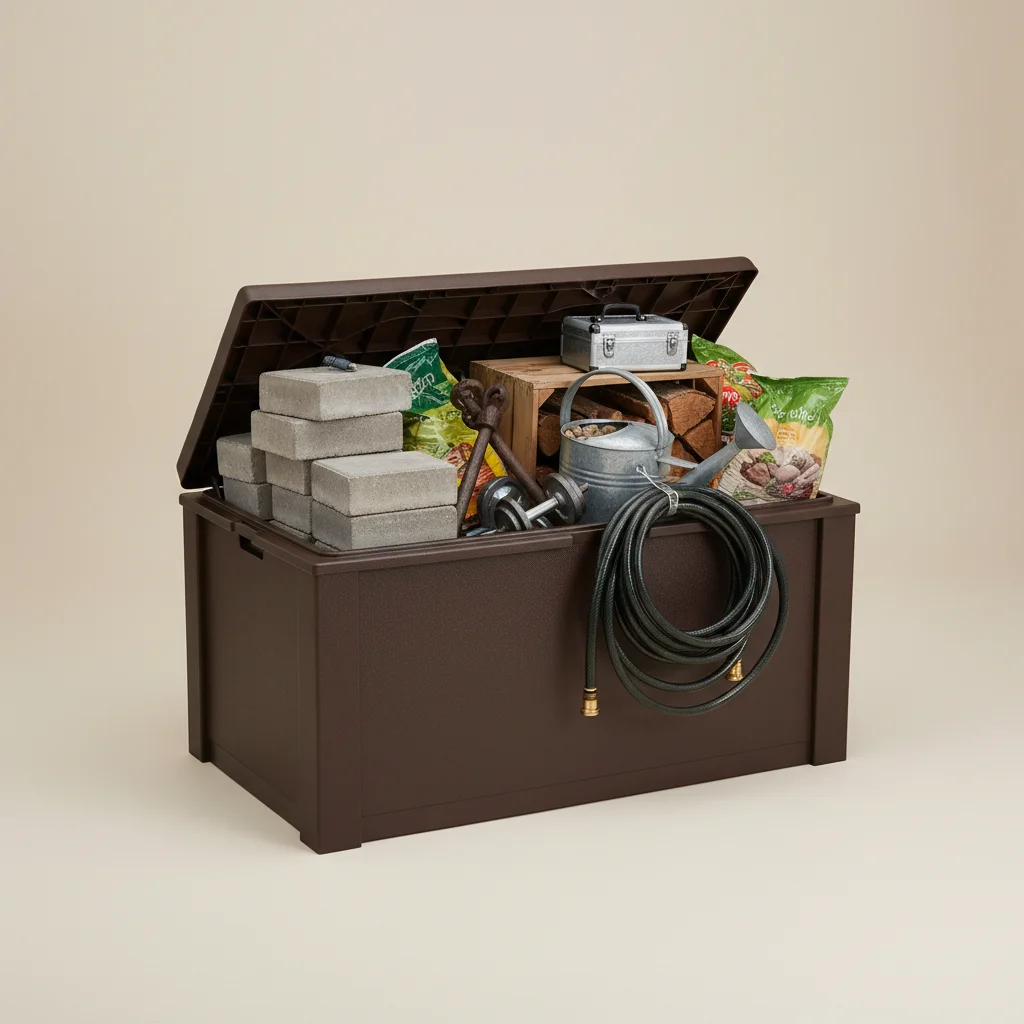
Understanding the weight capacity of your deck box is crucial for both safety and longevity. Most standard deck boxes are designed to hold between 150 to 300 pounds of distributed weight, though some heavy-duty models can support up to 500 pounds or more. This capacity refers to the internal storage weight, not necessarily the seating capacity, which is often a separate specification.
Factors Influencing Deck Box Weight Capacity
Several key factors determine how much weight a deck box can safely hold. The material is paramount; resin and plastic deck boxes typically have lower weight capacities compared to those made from reinforced wood or metal. The construction quality, including the thickness of the panels and the strength of the base, also plays a significant role. A well-designed deck box will distribute weight evenly across its base and sides, preventing stress points that could lead to cracking or collapse.
The type of items you plan to store also impacts the effective capacity. Dense items like bags of soil or heavy tools will reach the weight limit much faster than bulky but lighter items like pool noodles or cushions. Always consider the density of your stored goods.
Identifying Your Deck Box’s Weight Limit
The most reliable way to determine your specific deck box’s weight capacity is to consult the manufacturer’s specifications. This information is usually found in the product manual, on the manufacturer’s website, or on the product packaging. If you no longer have access to these resources, a general rule of thumb for typical resin deck boxes is to assume a capacity of around 200-250 pounds, and then err on the side of caution.
For older or unbranded deck boxes, a visual inspection can offer clues. Look for signs of reinforcement, such as thicker bottom panels or internal support structures. If the base feels flimsy or shows any bowing, it’s best to assume a lower capacity.
Maximizing Storage Without Exceeding Limits
|
Our Picks for the Best Deck Box in 2026
As an Amazon Associate I earn from qualifying purchases.
|
||
| Num | Product | Action |
|---|---|---|
| 1 | Keter City 30 Gallon Resin Outdoor Storage Box and Patio Furniture Side Table for Pool and Garden Accessories, Brown |

|
| 2 | YITAHOME Outdoor Storage Box, 45 Gallon Waterproof Resin Deck Box, Lockable Organizer for Patio, Poolside, Deck, Cushions, Throw Pillows, Garden Tools, Brown |
|
| 3 | VEVOR Outdoor Storage Box, 150 Gallon Waterproof PE Tarpaulin Deck Box w/Galvanized Frame, All-Weather Protection & Portable, for Camping, Garden, Poolside, and Yard, Black & Green |
|
| 4 | Keter Signature Everwood 50 Gallon Resin Deck Box for Outdoor Storage – Weather‑Resistant Balcony & Patio Box for Cushions, Throw Pillows & Garden Tools, Walnut |
|
| 5 | Outdoor Storage Box, 30 Gallon Resin Waterproof Deck Box, Lockable, Built-in Handle, Outside Storage Container for Patio, Garden and Garage |
|
| 6 | Keter City Outdoor Plastic Storage Box Garden Furniture 57.8 x 44 x 54.8 cm - Brown |
|
| 7 | EAST OAK Outdoor Storage Box, 31 Gallon Deck Box Indoor and Outdoor Use, Waterproof Resin Storage Bin for Package Delivery, Patio Cushions, Gardening Tools, Lockable, UV Resistant, Grey |
|
| 8 | Suncast Outdoor Deck Box - 22 Gallon Java Resin Outdoor Storage Box, Weatherproof Patio Storage Bin Container for Seating & Organizing Cushions, Tools & Towels for Pool, Yard, & Garden |
|
| 9 | Keter XXL 230 Gallon Deck Storage Box Outdoor Patio Container ~ White |
|
| 10 | Keter Kentwood 50 Gallon Resin Deck Box for Outdoor Storage – Weather‑Resistant Balcony & Patio Box for Cushions, Throw Pillows & Garden Tools, Dark Grey |
|
To make the most of your deck box’s capacity without risking damage, consider how you arrange items. Place heavier items at the bottom, distributing their weight as evenly as possible across the base. Avoid piling all heavy items in one corner. For lighter, bulkier items, utilize the upper space.
- Distribute weight evenly across the bottom surface.
- Place heaviest items first, directly on the base.
- Utilize vertical space for lighter, bulkier items.
- Avoid sharp or pointed objects that could puncture the base.
- Do not overfill to the point where the lid cannot close easily.
Regularly check the base and sides for any signs of stress, such as bulging or cracking, especially after storing heavy items. This proactive approach can help prevent structural failure and extend the life of your deck box.
Common Mistakes to Avoid
One common mistake is using a deck box designed for light storage as a seating bench without checking its specific seating capacity. While many deck boxes are marketed as dual-purpose, their seating capacity is often different and sometimes lower than their internal storage weight capacity. Always verify both specifications if you intend to use it for seating.
Another error is storing items that are too large or oddly shaped, forcing the lid to remain partially open. This not only compromises the weather resistance but can also put undue stress on the hinges and lid, potentially leading to damage. Always ensure the lid closes completely and without force.
When to Consider a Heavy-Duty Deck Box
If your storage needs frequently involve very heavy items like bags of concrete, large tools, or multiple sandbags, investing in a heavy-duty deck box is a wise decision. These models are typically constructed from thicker, more robust materials, often with reinforced bottoms and stronger hinge mechanisms. They are designed to withstand greater stress and offer superior durability over time.
Look for features like steel-reinforced frames, double-wall construction, and robust latching systems. While they may come at a higher price point, the added peace of mind and longevity can make them a cost-effective choice in the long run. Always compare the stated weight capacity with your actual storage requirements before making a purchase.
Get our weekly buyer guide
Practical specs, not advice. Unsubscribe anytime.

I appreciate the details on construction quality. My current deck box, which I thought was pretty sturdy, started bowing a bit on the bottom. It’s one of those standard plastic ones, and I guess I overloaded it with some heavier items. Wish I’d known about the 150-300 pound range before I bought it.
This was exactly what I needed! We have a lot of outdoor cushions and blankets, and I wanted to make sure whatever we bought wouldn’t collapse. Understanding how the thickness of the panels and the base strength contribute to overall capacity made it easy to choose a really robust metal option. It’s holding up great.
Good breakdown on weight capacity. I always just assumed the seating capacity was the same as the storage, so it was good to learn that’s often a separate spec. My resin box holds our pool toys and cushions perfectly, but I wouldn’t try to store anything too heavy in it after reading about the material differences.
I was really worried about finding a deck box that could handle all our gardening tools and bags of soil. The info here about heavy-duty models supporting 500 pounds or more was super helpful. We ended up getting one of the reinforced wood options, and it’s been fantastic. No more cluttered shed!